Personalised School Labels Kids Can Recognise
A practical guide to personalised school labels: what to label, which sticker size fits where, and how one familiar character helps kids spot their gear.
The Six Blue Drink Bottle Problem
Put six blue drink bottles on a classroom bench and ask a five-year-old to find theirs. A small printed name helps the teacher, but it is not much use to a child who is still learning to read.
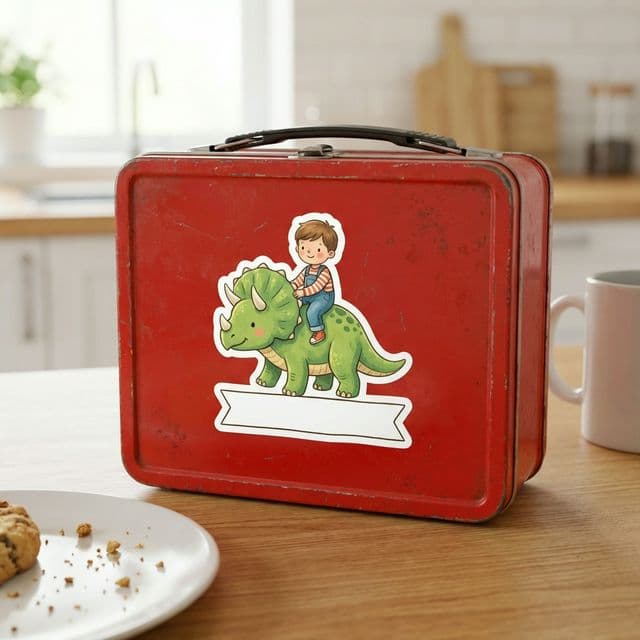
Now put an illustrated version of that child riding a dinosaur on one of the bottles. They know which one is theirs before they can read the banner underneath.
That is the useful bit about personalised school labels. A name identifies the owner. A familiar picture gives the child something they can recognise for themselves.
What School Gear Can You Label With Stickers?
Personalised stickers work best on clean, smooth, hard surfaces. Think bottles, lunchboxes, pencil cases, folders, notebooks and devices.
Lunch gear
Drink bottles, lunchboxes and snack containers get washed, dropped and handled every day. Use waterproof laminated stickers here, and choose a position that does not sit across a lid, hinge or heavily curved edge.
Our lunchbox sticker guide covers this particular corner of school chaos in more detail.
Pencil cases, books and folders
These do not face as much water, but they travel between desks and school bags constantly. A personalised character on the front makes them easier to recognise without trying to turn every pencil into a billboard.
School bags and technology
A larger sticker works on a smooth bag panel, tablet case or laptop lid. Check the school’s rules before decorating a school-owned device.
What about clothing?
Use a product made specifically for fabric or garment care labels. Sticker Me’s illustrated stickers are intended for smooth surfaces, not school uniforms, socks or the inside of a jumper.
Why a Picture Helps Before Kids Can Read
A standard label asks a child to recognise letters. An illustrated sticker gives them a face, colour and scene to look for. “Mine has me in space” is a much easier instruction than “find the tiny label that says Matilda”.
It also gives teachers a useful visual shortcut. The child with the astronaut bottle is easier to match than another name printed in small type.
This is especially helpful in Prep, kindy and daycare or childcare. The name banner is still there for adults. The character does the early recognition work.
Use One Character Across Their Gear
The simplest system is one child, one character and one scene. Use that same design on the belongings they need to find quickly.
Let them choose something they already care about. A dinosaur phase can become Dino World. A space obsession can become Space Explorer. Fairy Garden, Superhero and Pixel Hero work the same way. They are not choosing a label system. They are choosing who they get to be.
Keep the character and name banner consistent across the sheet. That repeated combination is what makes the bottle, folder and pencil case feel connected.
What Sticker Size Goes Where?
Sticker Me sheets come in three sticker sizes. This is the practical starting point:
| Size | Good places to use it | What to expect |
|---|---|---|
| 50mm | Pencil cases, notebooks, smaller containers and phone cases | Compact, with more stickers on each sheet |
| 75mm | Drink bottles, lunchboxes, folders and laptop lids | The most flexible size, with a character and name that are easy to see |
| 100mm | School bags, large folders and feature placements | Best when the sticker needs to be noticed from further away |
Measure the flat area first, particularly on curved bottles and small containers. A 50mm sticker is still about the width of a golf ball, so it is not intended for individual pencils or narrow handles.
For a detailed comparison, see the sticker materials and sizing guide.
Choose the Finish for the Destination
School gear gets a rougher life than a scrapbook page. For bottles, lunchboxes and equipment that gets handled frequently, choose the waterproof laminated option. Matte finishes make more sense for journals, cards and memory books that stay dry.
Whichever finish you choose, apply the sticker to a clean, dry surface. Avoid seams, textured fabric, moving parts and sharp curves.
How to Set Up a School Label System
Step 1: Upload a Photo and Choose a Scene
Choose a clear photo where your child’s face is visible. Upload it, then pick the scene together. The AI illustration guide explains what happens next.
Step 2: Pick the Right Sticker Type
Use the Name Labels option to add their name beneath the illustration. The picture helps the child recognise it; the banner helps everyone else return it.
Step 3: Preview Before You Print
Check that the face is recognisable, the name is spelt correctly and the banner is readable. You can preview the full sheet before ordering a physical copy.
Step 4: Put the Same Design in Useful Places
Start with the bottle, lunchbox, folder and pencil case. Those are smooth surfaces the child sees regularly. Use specialist garment labels for their hat, jumper and uniform.
Step 5: Refresh Each Year
Interests change quickly. A new sticker sheet each school year becomes a small record of what mattered at the time: Space Explorer one year, Superhero the next, then Pixel Hero.
The System That Survives the Year
The goal is not to put a giant sticker on every object your child owns. It is to give them one clear, familiar marker on the things they need to recognise.
Make a personalised Name Labels sheet from their photo, let them choose the scene, and preview the character together before you order.
Peel off another one
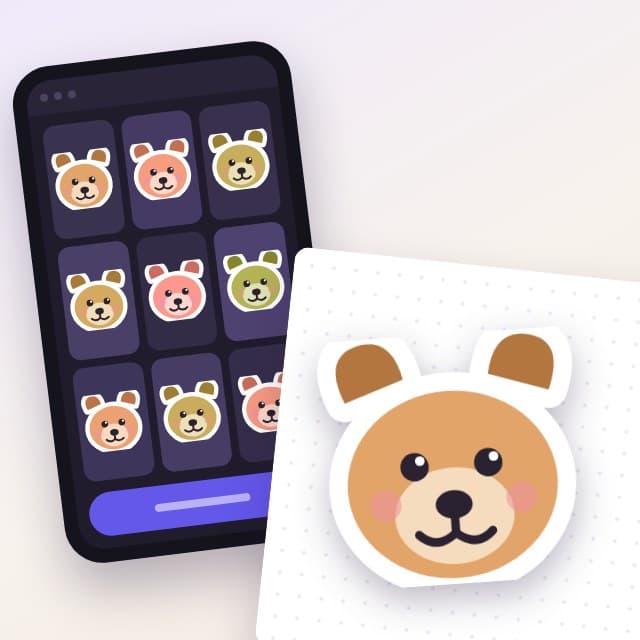
How to Print ChatGPT Stickers in Australia
You made stickers in ChatGPT and now you want them on a drink bottle. What actually stands between a generated image and a real peel-off sticker.
Read article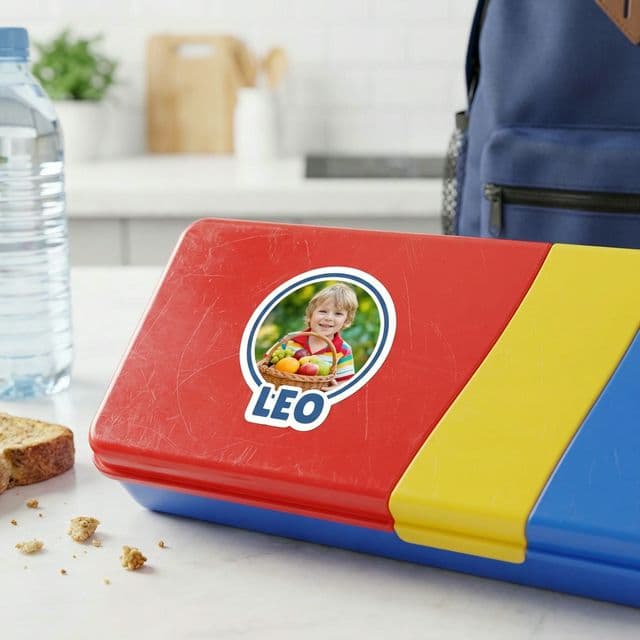
The Lunchbox Label Your Kid Will Actually Be Proud Of
Plain name labels are boring and kids ignore them. A personalised illustrated lunchbox sticker does identification and pride in one go.
Read article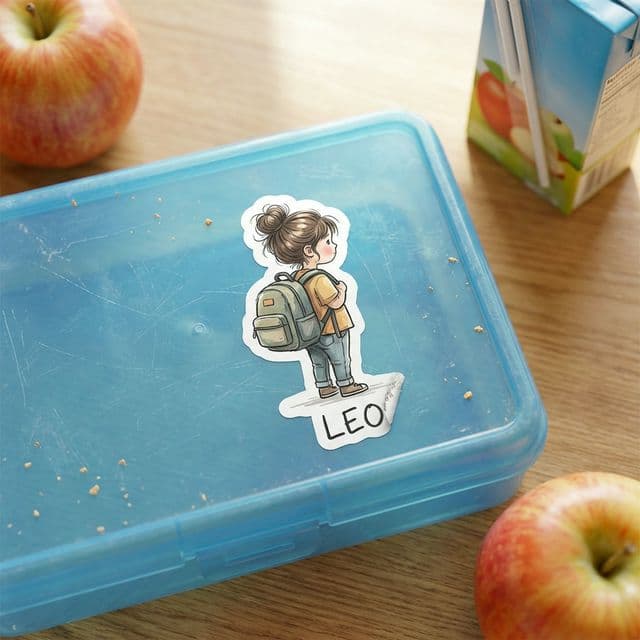
First Day of School Stickers Your Kid Will Love
How a personalised sticker on a lunchbox turned my daughter's first day nerves into a grin. Plus prep tips for Australian parents.
Read articleWant to make one?
Upload a photo, pick a scene, and see what our agents come up with. Accounts include free weekly generation credits, and printing is charged only when you order.