Why Kids Go Wild for Seeing Themselves as a Cartoon
Every parent question about why stickers are such a big deal for kids. The psychology, the reactions, and why personalised ones hit different.
Questions Parents Actually Ask About Kids and Stickers
I get a lot of messages from parents after they've ordered personalised stickers for their kids. Some are photos of the reaction. Some are reorders. Some are questions about why their child has now attached their entire sense of self to a 75mm vinyl circle.
These are the questions that come up most often.
Why do kids react so strongly to seeing themselves as a sticker?
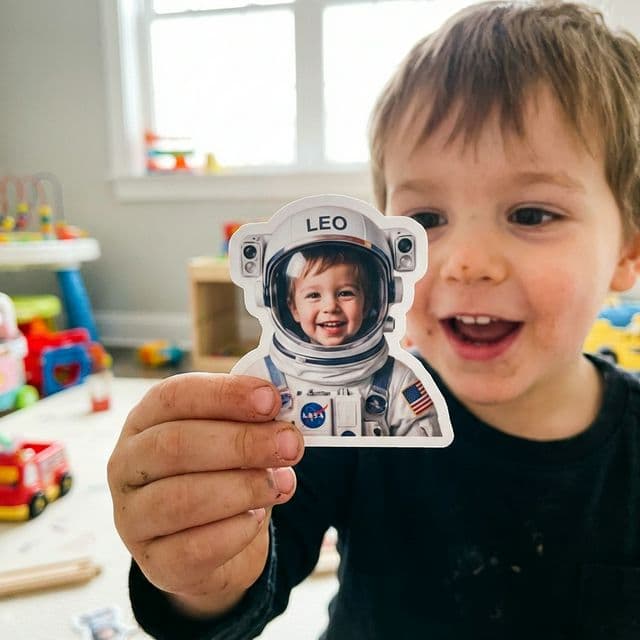
The first time a kid sees a personalised sticker of themselves, the pattern is remarkably consistent. A beat of silence. Wide eyes. Then "IS THAT ME?" at a volume that suggests indoor voices are still a work in progress.
What's happening is recognition combined with novelty. They know it's them (the AI preserves their actual facial features) but they've never seen themselves like this before. They're an astronaut. They're riding a dinosaur. They exist in a world they've only ever imagined.
Developmental psychologists call this "narrative identity." Even young children are building a story about who they are, and seeing themselves depicted as someone brave or adventurous reinforces a positive self-image. In simpler terms: they think it's cool and it makes them feel important.
Is this just a novelty that wears off?
It hasn't in my experience. My son got his first personalised sticker eight months ago. It's still on his lunchbox. He still points it out to new people. When we got a new drink bottle, his first question was whether the sticker could move to it.
The novelty of the initial reaction fades, yes. But it gets replaced by something more lasting: ownership. That sticker is theirs in a way that mass-produced stickers aren't. Nobody else has it. It was made from their photo. It stays.
Why are personalised stickers different from regular sticker packs?
A generic sticker pack is decoration. Fun for an afternoon, peeled off and forgotten within weeks. A personalised sticker is identity.
When a child sees a random cartoon dinosaur, they think "cool dinosaur." When they see themselves riding a dinosaur, they think "that's ME on a dinosaur." The difference is ownership. One is a product. The other is a portrait.
This is why the $5 sticker pack from the newsagent ends up scattered across the floor, but the personalised sticker on the lunchbox survives the entire school year. Kids protect what feels like theirs.
What age does this work for?
Every age, with different flavours.
Toddlers (2-3) recognise themselves and get excited. The understanding is simple: "that.s me!" But the joy is genuine. They'll point at it repeatedly and want every adult in the room to confirm that yes, it really is them.
Preschoolers (4-5) engage with the character. They make up stories about what their sticker self is doing. "I'm fighting a dragon!" The sticker becomes a prop for imaginative play.
Early primary (6-8) is peak showing-off territory. They want their friends to see it. They want to be the kid with the coolest sticker. They develop strong opinions about which scene they want and will negotiate accordingly.
Older primary (9-12) shifts toward identity expression. Less about showing off, more about curating personal style. A sticker of themselves as a gamer or surfer is a statement about who they are.
Teens pretend to be too cool for it, then quietly stick it on their laptop.
Do personalised stickers help with the "lost lunchbox" problem?
Absolutely, and this is one of the most practical reasons parents order them. A personalised character sticker on a drink bottle or lunchbox works as both decoration and identification. Teachers and other parents can match the sticker to the child at a glance.
But the real benefit is that kids are more careful with things that feel truly theirs. A bottle labelled with a Sharpie on the bottom is forgettable. A bottle with their illustrated face on it is something they track, protect, and bring home. We hear this from parents constantly.
Is there a social benefit for kids at school?
A big one, especially for shy kids. "Look at mine" is one of the most powerful phrases in a child's social toolkit, and a personalised sticker gives them something genuinely worth showing.
"That's me as a pirate." Instant conversation. For children who struggle with social situations, having something interesting on their belongings serves as a gentle icebreaker. The sticker does the opening line for them.
When several kids in a class have personalised stickers, the comparing becomes its own social activity. "I'm an astronaut, what are you?" It's low-pressure interaction built around a shared interest. Great for first day of school nerves especially.
Why not just use a photo sticker?
A photo sticker is a photo. An illustrated sticker is a transformation. It places your child in a context they could never actually be in: riding a dragon, exploring space, surfing a giant wave.
The illustration also provides abstraction that makes it feel more like art and less like a passport photo. It's your child, but in a way they've never seen themselves before. That novelty is what sparks the reaction. A photo on a lunchbox is identification. An illustration on a lunchbox is a statement.
My kid wants stickers of EVERYTHING now. Is that normal?
Completely. Once a child sees themselves as one character, they immediately want to see themselves as others. The astronaut kid wants to try the dinosaur scene. Then the superhero scene. Then they want one for their best friend.
This is healthy creative exploration. They're trying on identities, which is exactly what kids this age are supposed to be doing. Accounts include free generation credits each week, and you can earn bonus credits or buy more when needed. Let them explore, then order the favourites.
What do other parents use these for?
The biggest use cases: school labels and lunchbox stickers for daily gear. Birthday party favours where every guest gets a personalised sticker sheet. Reward stickers for chore charts. Bedroom door decorations. Gifts for grandparents featuring the grandkids.
Teachers use them too: end-of-year student gifts, classroom rewards, reading challenge achievements. A reward sticker featuring the child's own face generates more pride than a generic gold star. The reward feels more personal because it is more personal.
How Do I Get Started?
Head to the design page. Upload a photo of your child. Pick a scene together: let them choose. The AI generates the illustrated version in seconds. You can try every scene in the library without spending anything.
Use code WELCOME50 for 50% off plus free shipping on your first order. You'll know within two seconds whether it lands. It always does.
Peel off another one
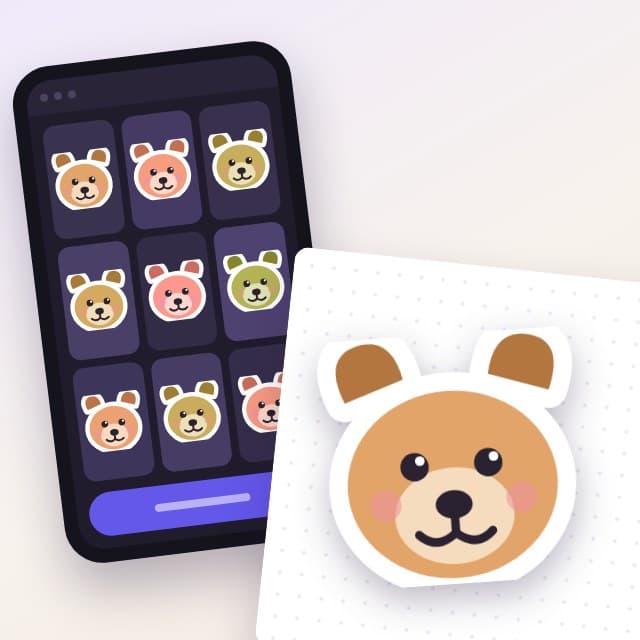
How to Print ChatGPT Stickers in Australia
You made stickers in ChatGPT and now you want them on a drink bottle. What actually stands between a generated image and a real peel-off sticker.
Read article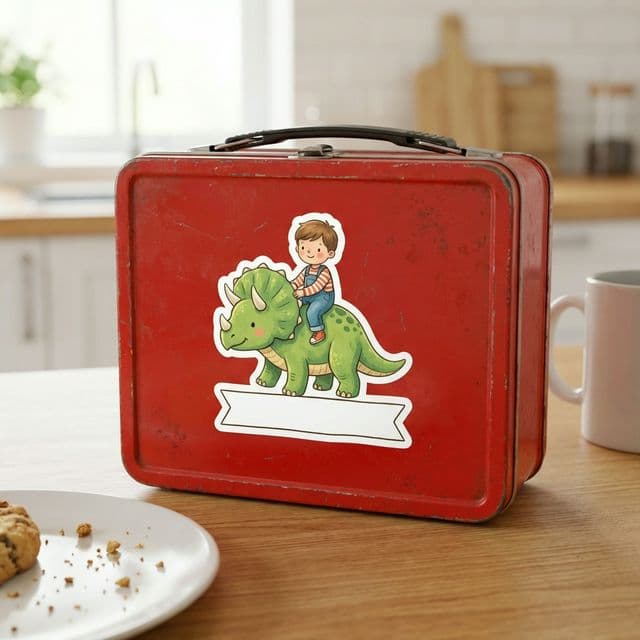
Personalised School Labels Kids Can Recognise
A practical guide to personalised school labels: what to label, which sticker size fits where, and how one familiar character helps kids spot their gear.
Read article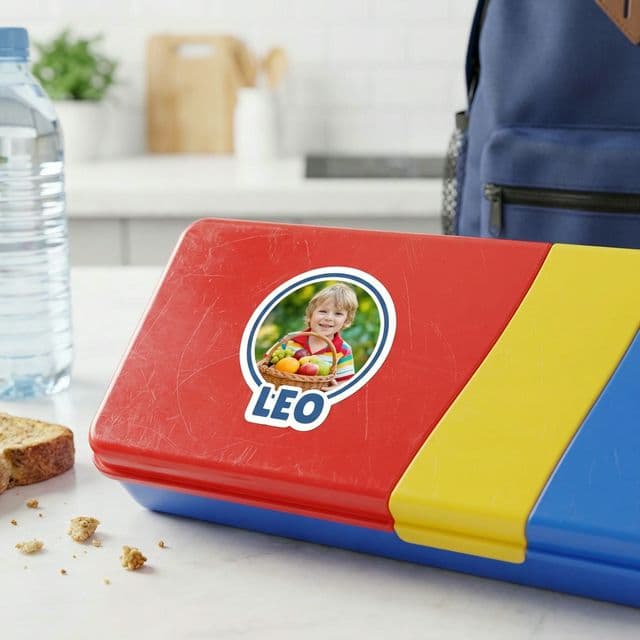
The Lunchbox Label Your Kid Will Actually Be Proud Of
Plain name labels are boring and kids ignore them. A personalised illustrated lunchbox sticker does identification and pride in one go.
Read articleWant to make one?
Upload a photo, pick a scene, and see what our agents come up with. Accounts include free weekly generation credits, and printing is charged only when you order.